The Four Levels of Happiness®

Four Levels of Happiness

Happiness is the only goal that people pursue for its own sake, which makes it an ideal lens for explaining why people and organizations behave as they do. The Four Levels of Happiness model shows leaders how to elevate the powerful drive for happiness and direct it toward shared goals, strong ethics, and great performance. Click here for a full description of the Four Levels.


Sign up for the eNewsletter

 You can request a subscription to The Four-Level Leader, our bimonthly eNewsletter, by contacting eNews@spitzercenter.org


 Free Discovery Sessions

Do you want to gain critical insights on how your organization is managing its culture? Sign up for a free Discovery Session from the Spitzer Center for Ethical Leadership. Here's what we offer and how to sign up.


More News

Ask Fr. Spitzer

The Levels in Action

 Ethics in Action

February 8, 2010

Did the Ethics of Health Care Reform Help Scott Brown Win in Massachusetts?


In the wake of Scott Brown’s upset win in the Massachusetts Senate election last week, a lot of observers have offered their views on how a Republican won in such a “blue state.”  A case can be made that the ethics of Washington politics helped to tip the balance toward Brown – and by ethics, I don’t mean scandals, crimes, or corruption. I mean that voters and politicians use different ethical standards in judging which actions are permissible and which aren’t. Read More �

Major Catholic Health Care System DEEMs the “Journey” a Trip Worth Taking


Like any large organization built on a mission of helping people, the Sisters of Charity Leavenworth Health System (SCLHS) needs mission-driven employees to succeed. Towards that end, the Catholic, faith-based network of 13 hospitals and clinics has deployed the Journey to Excellence program to help strengthen its broader employee development strategy. Read More �

The Top Ten Level 3 Stories of 2009


It’s customary at this time of year to reflect on the year that has just passed by compiling lists of notable people and events. I was tempted to pick the low-hanging Level 2 fruit every year provides (“2009’s Worst Ethical Lapses” or “The Year’s Most Infamous Cases of Level 2 Dominance”). But I had to ask myself, Do readers really want to rehash Galleon Group’s descent into insider trading … or Christian Bale’s obscenity-laden tirade … or the failings of Governor Sanford or Tiger Woods? While the editor lurking inside me said, “Yes, they do!” a nobler impulse prevailed. So here’s a look back at some of the year’s more memorable Level 3 moments. Read More �

An Antidote for Ethical Disasters

Part two of a two-part series on ethics education for businesses and organizations

If you do a search of companies that offer ethics training and education, you’ll find that many focus almost exclusively on the arena of legal compliance. I made the case earlier that compliance education is necessary but insufficient, and described the risks a company runs in reducing ethics to legal compliance alone. In fact, I called this cramped perspective a recipe for ethical disaster, which raises a question: What does the antidote look like? What follows is a brief overview of four ways to ensure that an organization is laying the groundwork for a truly ethical culture. Read More �

The Levels in Action

What the Media Have Missed in the Tiger Woods Story


We’re going to crawl out on a limb here and guess that Tiger Woods is a very Level 2 guy. It is not the Spitzer Center’s practice to pin this label on people, but we’ll make a guess here (and it is just a guess) because his highly publicized crisis suggests it. The “Tiger Is Level 2 Hypothesis” also helps to explain a lot of things that have his admirers scratching their heads. Read More �

Hollywood’s Greatest Tribute to Level 3


When I was a kid, my siblings and I found it fashionable to mock It’s a Wonderful Life, and regard it as one of those holiday chestnuts that TV stations roasted to death every Christmas.  The running joke was that after Thanksgiving, the movie took over the tube and held it hostage.  “Are there any movies on tonight besides It’s a Wonderful Life?” we’d ask each other. I have to admit, as I got older the film really grew on me, so much so that I bought my own copy and made it a family tradition to watch it every season.  I am not ashamed to admit that there are scenes I still can’t get through without moist eyes. Read More �

A Recipe for Ethical Disaster


Part one of a two-part series on ethics education for businesses and organizations

Is it possible that a common approach to business ethics training might do as much to cause ethical problems as prevent them? While that may seem counterintuitive, it’s a risk that companies run in reducing ethics to little more than legal compliance. Unfortunately, that’s the case today in many organizations, where a legalistic view of ethics holds sway. Read More �

News From the Center

National Catholic Register Shines Its Spotlight on Fr. Spitzer


The December 6-12 edition of the National Catholic Register includes a major profile of Fr. Robert Spitzer and the ambitious agenda he has set for the Spitzer Center for Ethical Leadership and the Magis Institute for Faith and Reason. The 2,000-word article, written by Anthony Flott, included interviews with Fr. Spitzer, Magis President Emeritus Timothy Busch, Spitzer Center Executive Director Jim Berlucchi, and Don Western, a retired executive with Caterpillar, who commented on the impact of Fr. Spitzer’s curriculum at that company. Read More �

Video Story

"Every Person Wants to Leave a Legacy in Life”

Excerpts from Fr. Spitzer Orange Coast Legatus Talk
 
Fr. Robert Spitzer is often introduced as a compelling and passionate speaker.  If you haven’t had a chance to hear him speak yet, here's a chance for you to see what people are talking about. Fr. Spitzer was in Newport, California, on November 10 to address the Orange Coast Chapter of Legatus. His 45-minute talk was recorded, and the video posted below includes nine minutes of excerpts. Read More �

The Levels in Action

How Empathy Engineered the First V-8 Engine


If you think your own boss is tough, imagine working for Henry Ford. Ford is often seen today not just as the founder of the car company named for him, but also as the founder of the My Way or the Highway School of Management. The world has neither forgotten nor quite forgiven his quip about the Model T: “Any customer can have a car painted any color that he wants so long as it is black.” One might assume Ford was equally imperious when dealing with his subordinates, but at least one employee knew how to deal with Ford. Read More �

Ask Fr. Spitzer

What Is It About Our Culture That Needs “Transforming”?


Q: The press release about Fr. Spitzer’s new mission talked about his desire to “transform the culture” through the Spitzer Center and Magis. What sort of transformation are you talking about, and is the work of the two organizations linked in some way or very different?

A:
My first book was called Healing the Culture, and as the title made clear, I think there’s something wrong with our culture that needs to be fixed. People describe the root causes of our cultural problems in different ways. Some call it materialism or hedonism; others call it atheism or nihilism. Whatever you call it, I believe there’s a deeper problem beneath these “isms,” and in my view, that problem is despair. Our culture is suffering from a progressive waning of hope. Read More �

The Levels in Action

The Question That Makes My Day


“How can I make an Optimal Positive Difference with my life today?” I had been reflecting on this question, which I call the OPD (optimal positive difference) formula, most mornings for about a month. It was definitely helping. My instinctive self-concern seemed to fade as I launched into my daily challenges. Making a contribution (Level 3) was a much more satisfying orientation than simply leaning into my ego needs (Level 2). Consciously bringing Level 3 to the fore made me actually think about how I could make the world a better place – today. But then a morning came when this familiar morning reflection provoked some discomfort. Read More �

Measuring the Impact Culture Has on Long-term Performance


Most leaders know in their gut that an organization’s culture is bound to affect its performance, but that hunch still leaves some large unanswered questions. How much of an impact does culture have? What types of cultures perform well and which perform poorly? One of the largest studies undertaken to answer these questions was done by two Harvard Business School professors, John Kotter and James Heskett.  Here's a look at their intrguing finding and its releationship to the Four Levels of Happiness®. Read More �

Ask Fr. Spitzer

Can You Be Ultimately Happy Without Faith?


Q: I know from the Four Levels Defined page on your website that the fourth level is ultimate or transcendent happiness. My question is, can you be a Level 4 person but not be religious or practice any faith in the traditional sense of that word?

A: Let me offer you my opinion on that. I think people of all backgrounds and beliefs can experience transcendent happiness – and I believe we all have an innate desire for it – but it is a rare thing to find a person who is a Level 4 dominant without faith in God. And the reason it’s rare is that Level 4 without God is impersonal, and it’s hard to make something impersonal the center of your life. Read More �

News from the Center

10 Valuable Insights from Fr. Spitzer’s Roadshow


Now that he’s free to work fulltime to advance the goals of his institutes, Fr. Robert Spitzer hasn’t just hit the ground running, he’s hit the air flying. In the month since his move to his new home base in Irvine, California, Fr. Spitzer has travelled to Phoenix, Cleveland, and Denver to introduce leaders to his philosophy and promote the work of the Spitzer Center. If you haven’t had a chance to hear him speak, here’s an overview of 10 key insights derived from the trio of talks he delivered in Cleveland. Read More �

Phoenix Diocese Pioneers a Slow but Steady Approach to Spitzer’s Journey


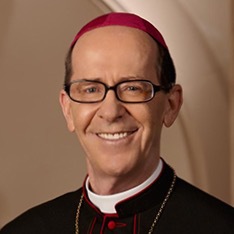
The Diocese of Phoenix is about halfway through its Journey to Excellence (JTE), which is somewhat unusual since staff there embarked on the course in December of 2008. But the slow pace has nothing to do with foot dragging. After taking the full course themselves, Bishop Thomas Olmsted and his leadership decided that a gradual approach was the best way to let JTE’s lessons take root and flourish. Phoenix Vicar General Fr. Fred Adamson (left) was interviewed for this update on how the Journey is unfolding. Read More �

Ask Fr. Spitzer

How Do You Deal With Pressure From Above to Act Unethically?


Q: I came across a quote from Barbara Toffler, a former partner at Arthur Anderson, who said that “Culture shapes behavior. There are plenty of decent people who go astray because they’re in a culture that creates an environment in which they can’t get their jobs done unless they engage in unethical activities.” What are you supposed to do when many people around you are acting unethically, and you’re under pressure from your boss to cross the line yourself?

A: My advice is simple: Don’t do it! That’s Rule No. 1. Don’t even come close to the edge, because if you do cross that line you’re being pressured to cross, no one will defend you later. Read More �

The Levels in Action

It’s the Empathy, Stupid


A few years ago, I was given the large and challenging assignment of explaining a major shift in business strategy.  The corporate division I worked for had been on a losing streak in terms of new product development, so the leadership had appointed a task force to figure out what we were doing wrong. The group came back with a thoughtful analysis of the core problem and a new strategy to overcome it. My job was to rally the troops behind the new effort. Read More �

News Release

Fresh from Transforming Gonzaga, Fr. Robert Spitzer Now Aims to Transform the Culture


Irvine, California, September, 2009: 
In 11 years as president of Gonzaga University, Fr. Robert J. Spitzer, S.J., Ph.D., earned widespread praise for reinvigorating the school. As of September, he has embraced a broader, nationwide agenda of renewing American culture by developing web-based curricula to address key contemporary issues. Fr. Spitzer’s new mission has taken him to Irvine, California, where he has assumed direct leadership of two institutes he founded: the Spitzer Center for Ethical Leadership and the Magis Institute of Faith and Reason. Read More �

Ask Fr. Spitzer

Is the Size of the National Debt an Ethical Issue?


Q: There’s a lot of debate in the country right now over the size and growth of the national debt. Do you see this as a purely political issue, or is there a legitimate ethical dimension as well?

A: I think there is a very important ethical issue involved here. If we’re running up a very large debt and we don’t pay it back ourselves, then our kids will inherit that debt and they will have to pay it off. They won’t be able to borrow like we’ve been borrowing because the debt has already reached a critical amount, so we’re basically stealing from the younger generation to pay for the excesses of the older generation. Read More �

Beyond the Smiley Face: Understanding What Happiness Really Means


The concept of happiness lies at the core of the Spitzer Center’s curricula, but we understand why this word doesn’t always resonate with leaders when they first hear it. In modern English, the word has been drained of much of its deeper meaning, and the culture at large often trivializes happiness. Fr. Robert Spitzer is practiced in presenting happiness in its proper light. The Four-Level Leader asked him how he does it, and here’s his reply. Read More �

Ethics in Action

The Ethical Lapse the Best of Us Succumb To


There’s a sin that I committed almost daily through much my work life, not through obstinacy but because I didn’t realize that I was doing anything wrong. I’d wager many people reading this column routinely commit the same transgression. It’s ingrained in the culture and human nature, and rarely condemned from the pulpit or by ethicists. Read More �

The Levels in Action

Summing Up Life in Six Words


Do you think that you could summarize your life in just six words? Before you dismiss the notion, you should know, if you don’t already, that many people have accepted the six-word challenge. Their very short stories were gathered into a book entitled Not Quite What I Was Planning: Six-Word Memoirs by Famous & Obscure Writers. Read More �


Somewhat Amusing Ethical Anecdotes


A few months back, I purchased a book of business anecdotes, believing it would be filled with edifying stories of relevance to the Spitzer Center’s mission. I was wrong. It was pleasant reading, but few of the entries touched upon issues like ethics, higher purpose, faith, happiness, etc. I thought it best to save the few that did for the dog days of August, and those days have arrived. This article’s modest headline was inspired by one of the anecdotes that follow. Read More �

The Levels in Action

Memo Suggests GM’s Decline Was Caused by a Level 2 Culture


In the wake of GM’s bankruptcy, various reasons were advanced as to why America’s largest automaker failed. We heard a lot about labor and legacy costs, healthcare costs, the credit crunch, and other hardships. But the single largest contributing factor may have been overlooked in most news reports. An insider memo, written in 1988 by one of GM’s top executives, suggests the company’s slow decline was due to its Level 2 culture. Read More �

Ask Fr. Spitzer

What, Me Contemplate? Advice for Those Who Find Contemplation Hard


Q: I know that you advise people to spend time each day in contemplation, but I find that hard to do because I’m not introspective by nature. Have you come across other people with the same problem?  What do you tell them? Read More �

Ask Fr. Spitzer

What’s Your Take of Sanford’s Mistake?


Q: Governor Mark Sanford of South Carolina made headlines for his extramarital affair in Argentina. Whenever there’s a story like this, some people say it has no impact in terms of the person’s ability to lead, and other people say it makes a huge impact. Who’s right? Should it make a difference or shouldn’t it? Read More �

Interview with Fr. Spitzer

Even “Bulldozers” Can See the Value of Culture


In a recent Q&A column, Fr. Robert Spitzer said an organization can build a Level 3 culture if 20 percent of employees work toward that goal. In this follow-up interview, he discusses his own experience with culture change and describes different conditions that promote change or hinder it. Read More �

The Levels in Action

Bob Costas vs. the Jerk


Back in the late 1980s, I had the pleasure of meeting Bob Costas when he emceed a luncheon to benefit a charity I worked for. My job that day included writing one-line introductions for 60 athletes and sports personalities who were there as celebrity guests. I felt presumptuous handing a pro like Costas 60 index cards with my recommended wording for each introduction. To my surprise, he sat with me and patiently went through all of them. Read More �


One Company's Journey From Level 2 to an "Actively Caring" Culture


Joanne Morton is a Human Resources manager with a heavy equipment manufacturing company in Illinois. She has an extensive background in corporate culture measurement and change, and she was one of the first HR professionals to apply the Spitzer Center’s Four Levels of Happiness® model to an industrial setting. In this interview, she describes the curriculum’s impact on the large facility where she worked from 2005 to 2008. Read More �


"The Many Faces of Fr. Spitzer"


In his tenure as president of Gonzaga, Fr. Robert Spitzer has earned a great reputation for his inspirational leadership.  As he prepares to leave the post of president, the university has honored him with a stirring 9-minute video. Read More �


The Mother of All Bureaucracy


A few years back, the New York Times ran a story about the company I was working for. The story, based on an interview with the president of my business unit, concerned a change in the company’s plans for developing a key product. It was big news, and it was already public. Where was the harm in keeping employees informed? Read More �


My Favorite Debacle


I can still remember how thrilled I was when the email arrived in my inbox about 12 years ago. The sender was a Senior VP I’ll call “Jack.” The message was “I like your work. Are you interested in writing some speeches for me?” Read More �


Ask. Fr. Spitzer

A Level 3 Mission Doesn't Guarantee a Level 3 Culture


Q: I work for a non-profit organization that’s dedicated to helping people.  Since that’s what we’re doing already, why would we need the programs the Spitzer Center provides? 

A: When you have a Level 3 mission, that doesn’t necessarily mean that all your people are working at Level 3 and you have a Level 3 culture. For example, if you’re a school, you have a step up in trying to achieve a Level 3 culture, because people who choose to be educators are already thinking about helping student. That’s a wonderful thing, but when you bring all these wonderful people together, there’s no guarantee they won’t behave in a way that’s more consistent with Level 2. There are several reasons for this. Read More �


Interview With Fr. Spitzer

How Do Companies View the Collar?


It’s a question friends of the Center have asked in private: How do companies respond to a leadership message when the messenger is a priest? Here’s an answer provided by Fr. Spitzer himself. Read More �


Ask Fr. Spitzer

How Many People Need to Change for Culture Change to Happen?


Q: I work in an organization where the culture isn’t great – lots of politics, mistrust, and cynicism. I’d love to help develop a better culture, but the challenge seems too big to even contemplate. How do you get thousands of people behaving one way to start behaving differently? Read More �

Ethics in Action

Ethics With a Very Small “e”


Like most people who've worked in large corporations, I’ve undergone my share of ethics training.  But before I took the Spitzer Center’s Journey to Excellence course, my definition of ethics was cramped at best. Read More �


The Case for Making Forgiveness a Corporate Value


One of the silliest things I’ve found in the workplace is the tendency to speak as though human beings were perfectible. You see it in phrases like “flawless execution” and “the relentless pursuit of perfection,” which are problematic as aspirations and toxic if transformed into expectations. We all make mistakes, especially when we’re trying new things or pursuing ambitious goals.The way organizations respond to mistakes says a lot about the overall health of their culture. Read More �

Ethics in Action

Good Ethics Is Good Business


Early in my career, I was proud to get my first management job at one of the country’s oldest nonprofit organizations.  The sense of pride I felt at the start was diminished in the long run by an admission from a leader I liked and admired. Read More �

 Ask Fr. Spitzer

Are Bailouts Ethical?


Q: A lot of the public anger over the massive federal bailouts comes down to ethics. Companies and industries that behaved badly are getting rewarded. How does an expert in ethics like Fr. Spitzer view the whole matter? Are people right to be angry?

A: (from Fr. Robert Spitzer) From an ethical perspective, the problem here is a conflict between two principles: the principle of the common good and the principle of justice. People often speak of these principles together – “justice and the common good” – but at times they can be directly opposed to each other. Read More �

 
Fr. Spitzer Outlines Post-Gonzaga Plans


When Fr. Robert Spitzer, S.J., leaves the presidency of Gonzaga University in July, the growth of the Spitzer Center for Ethical Leadership will be one of his top priorities. Fr. Spitzer also plans to devote more time to the Magis Institute, which he founded, and to finishing three academic books and writing popular versions of six other academic books he has authored. Read More �